Nazi Party
Der goldene HandschuhThe Nazi Party enters the narrative chiefly through the career of WH 1, whose membership and wartime-era gains bind political opportunism to the dispossession of Jewish families. His later fall from influence, and the public attempt to rehabilitate him decades afterward, show how the Party’s legacy persists not only in the property acquired under Nazi rule but also in the uneven struggle over who is remembered, condemned, or forgiven.
Membership and Political Opportunism
WH 1 had joined the Party in the 1920s. The account presents his membership as an act of calculation rather than conviction: he had, it says, an instinctive sense that the Nazis would seize power. This distinction does not lessen his responsibility in the narrative. Instead, it makes his political allegiance part of a deliberate effort to anticipate and benefit from a changing order.
The description of WH 1 as an early Party loyalist connects personal advancement to political power. His later belief that he alone had been made to pay for the conduct of wealthy shipping families is presented as his grievance, not as an exoneration. The Party’s significance here lies partly in how its rise offered an opening that he recognized and used.
Expropriation and Material Gain
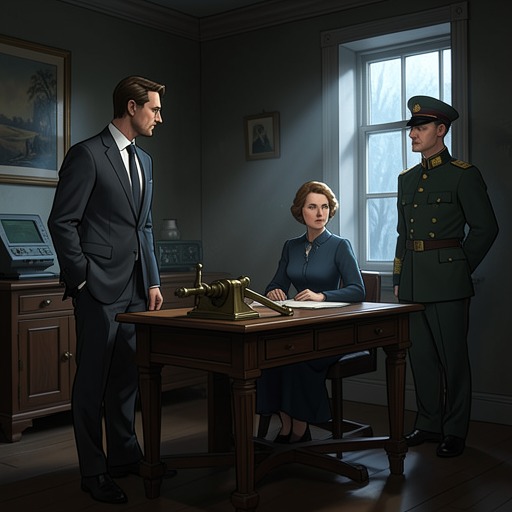
In 1935, the Arronge family was among the first Jewish families to be expropriated. The losses named in the account are extensive: a villa on Harvestehuder Weg, the estate at Hornbek, and the family’s entire fleet. WH 1 benefited directly; the property effectively came to him ready-made. The narrative thus gives political persecution a concrete material result and identifies a beneficiary rather than leaving dispossession as an abstraction.
The account later reports that some members of the Arronge family managed to escape abroad, while the others were deported to camps and murdered, with only a few exceptions. Their fate changes the meaning of the transfer: the assets that advanced WH 1’s position were not merely the spoils of political upheaval but property taken from a family subjected to persecution and mass murder. The narrative does not describe the Party’s internal organization or specify the machinery behind this particular expropriation; it concentrates on the human loss and the recipient’s gain.
Defeat and Public Disgrace
After the war, details of what had happened to the Arronges became known, and WH 1’s standing collapsed. The account says he escaped a postwar trial, but the revelations nonetheless left him disgraced among Hamburg’s merchant community, which had traditionally prided itself on tolerance and cosmopolitanism. The Allies also confiscated two-thirds of the von Dohren fleet. Facing mounting pressure, WH 1 had to hand the company’s management to his son.
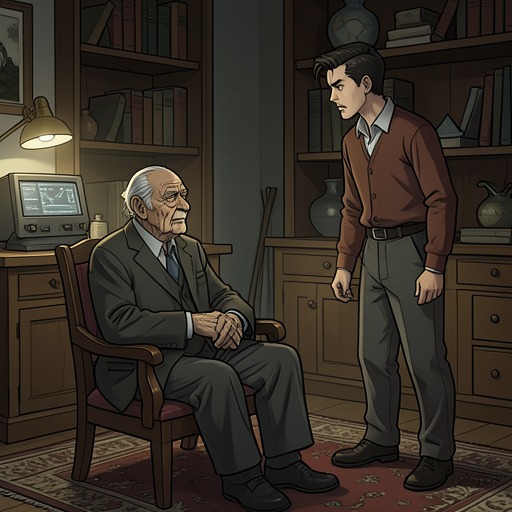
He interpreted this outcome as selective punishment. In his view, other established shipping families had also built fortunes on slavery and similar practices, yet it was he who had been ruined. That comparison registers his resentment, not an independent finding that the families’ histories were identical. His sense of having been singled out coexists with the narrative’s account of his own benefit from the Arronge family’s dispossession.
The Unsettled Work of Remembrance
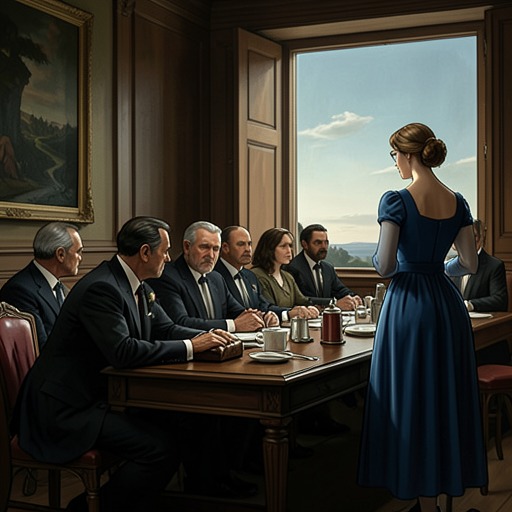
Decades later, WH 1’s son arranged a public attempt at his rehabilitation without telling him in advance. WH 1 learned what was planned only moments before the ceremony, when a prominent gathering—including the interior senator—had already assembled. Leyendieker’s appearance after twenty-five years made the occasion a public encounter with the past, but it did not produce reconciliation for WH 1. He felt neither honored nor grateful; the gesture struck him as an affront because it misunderstood the person he had become through years of hatred and plans for revenge.
The scene distinguishes public recognition from private reckoning. The ceremony seeks to restore WH 1’s standing, but the man it is meant to honor remains fixed in his grievance. In this account, the Nazi Party’s legacy is therefore not closed by defeat or by later public gestures: the consequences of political plunder endure in contested reputations, inherited power, and a reconciliation that its intended recipient cannot accept.